



SMGL-2641 1936 Parlimentary ballot Wurttemberg *SOLD
$130.00
Out of stock
Description
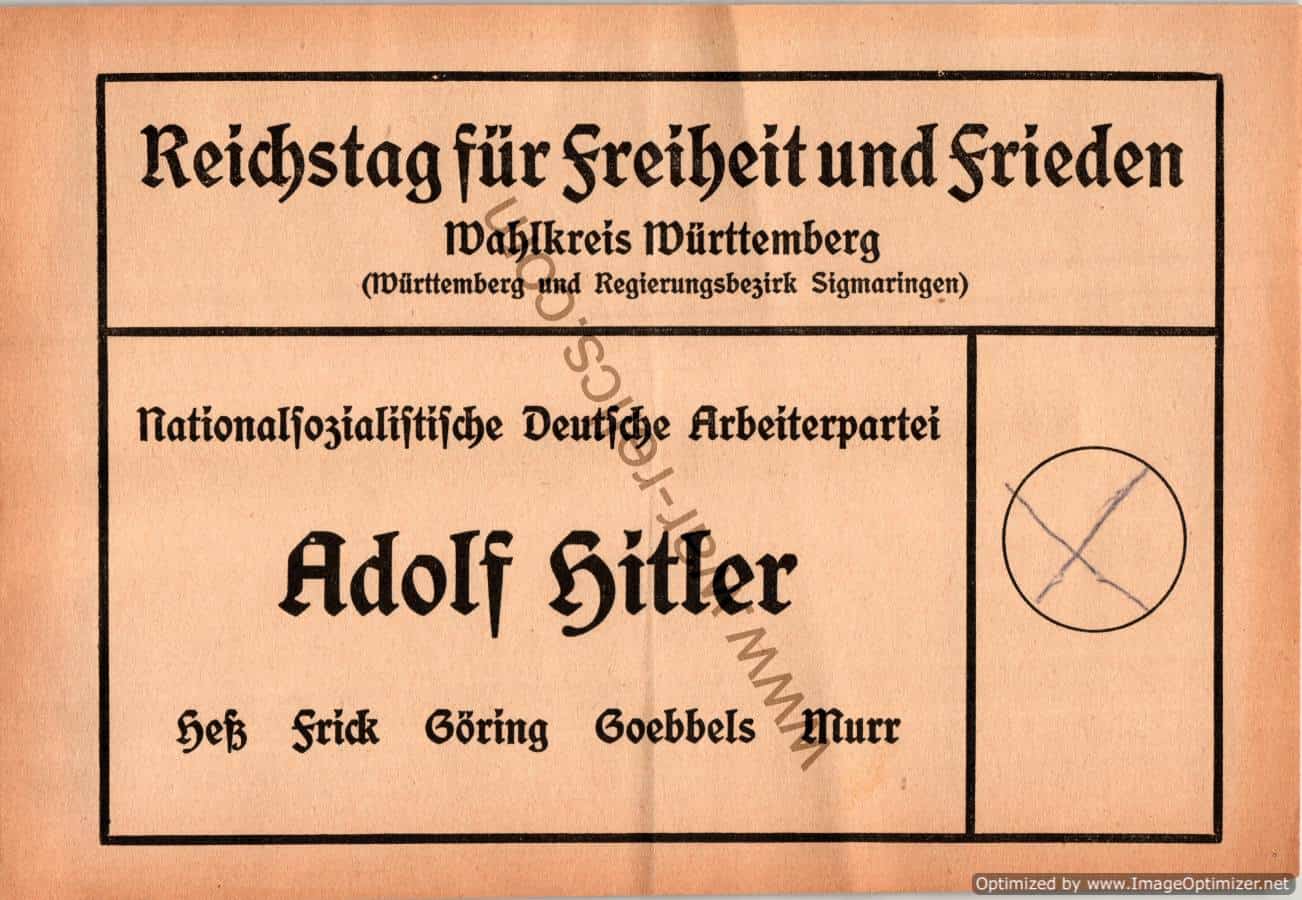
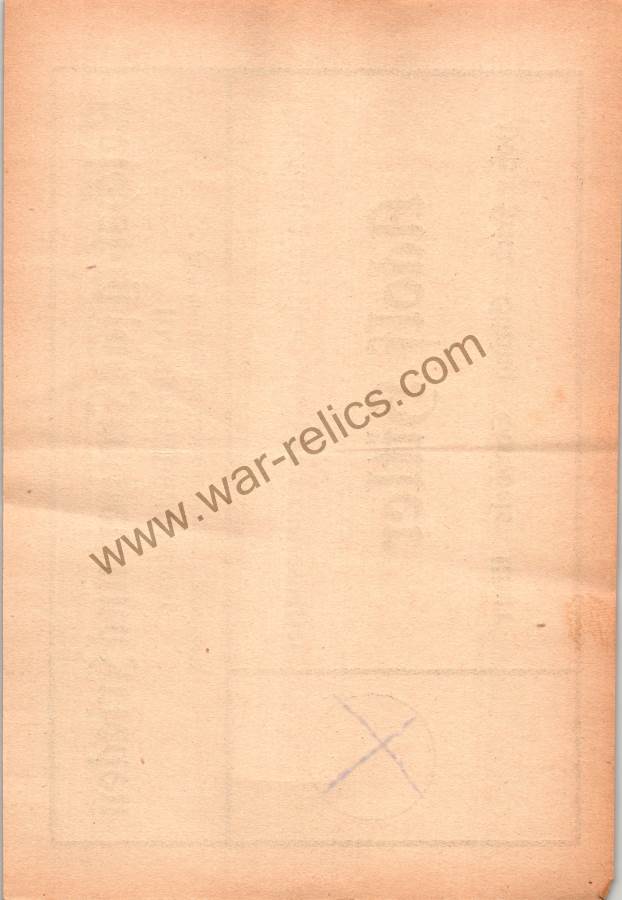
This is a rare 1936 parliamentary ballot for Wurttemberg. ………………………………………..I’m sure you recognize the names on the ballot except for perhaps Murr. Here is a bit about him: Wilhelm Murr (16 December 1888 ? 14 May 1945) was a Nazi German politician. From 1928 until his death he was Gauleiter of Gau W?rttemberg-Hohenzollern, and from early 1933 held the offices of State President and Reichsstatthalter (“Reich Governor”) of W?rttemberg. During World War II he also rose to the rank of SS-Obergruppenf?hrer in addition to his Party posts. At war’s end he committed suicide with poison while in French custody…………………………………………………………………….. About the 1936 election: Parliamentary elections were held in Germany on 29 March 1936.[1] They took the form of a single-question referendum, asking voters whether they approved of the military occupation of the Rhineland and a single party list for the new Reichstag composed exclusively of Nazis and nominally independent ‘guests’ of the party. Like previous votes in the Nazi era, it was rigged,[2] with a claimed turnout of 99% and 98.8% voting in favor. In a publicity stunt, a number of voters were packed aboard the airships Graf Zeppelin and Hindenburg, which flew above the Rhineland as those aboard cast their ballots.[3] Electoral slip from the constituency of Upper Bavaria -Swabia, Hitler’s home constituency, with seven prearranged candidates. Voters only had to accept or dismiss this option, as no other lists were available. Electoral slip from the constituency of Upper Bavaria -Swabia, Hitler’s home constituency, with seven prearranged candidates. Voters only had to accept or dismiss this option, as no other lists were available. This was the first German election held after enactment of the Nuremberg Laws, which had removed citizenship rights (including the right to vote) from Jews and other ethnic minorities. In the previous elections and referenda under Nazi rule, Jews, Poles and other ethnic minorities had been allowed to vote without much interference, and even tacitly encouraged to vote against the Nazis (especially in districts that were known to have large populations of ethnic minorities). Their removal from the electoral process accounted for much of the large drop in invalid and negative votes,[citation needed] which fell from over five million in 1934 to barely half a million in 1936. The Nazis also lowered the voting age, in large part so as to ensure that the electorate was about the same size as in 1934. The new Reichstag convened for formulary procedures on 30 January 1937 to re-elect its Presidium and Hermann G?ring as President of the Reichstag………………………………………………………………………Minor creasing and wear to this one.

Do you have
Unwanted Militaria?
Whether it’s individual pieces or full collections, we’ll buy it!